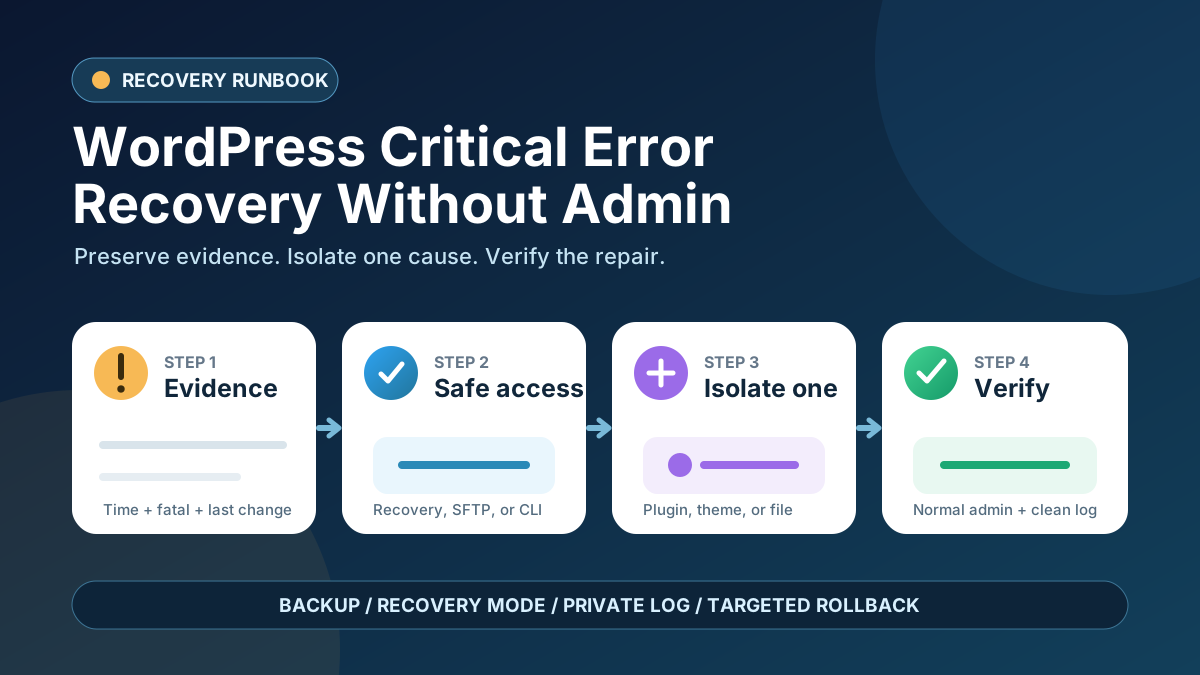
The WordPress message “There has been a critical error on this website” means PHP stopped the request with a fatal error. It does not identify the failed plugin, theme, custom code, PHP change, or incomplete update. When wp-admin is unavailable, the goal is to recover one safe access path, preserve the evidence, and change only the component the evidence names.
This guide fixes a WordPress critical error without wp-admin access, without pretending every critical error has the same cause. You will use Recovery Mode, a hosting panel or SFTP, a short-lived private debug log, and targeted command-line or database options. Success means the normal dashboard and public site work outside Recovery Mode, the triggering fatal no longer returns, and the repair survives a fresh request.
Quick answer: Check the administrator inbox for WordPress Recovery Mode. If the link is unavailable, open the host’s PHP error log and reproduce the error once at a recorded time. Follow the fatal error’s file path to the likely plugin, theme, custom code, or core layer. Back up the database and files, then pause or replace only that component through Recovery Mode, SFTP, a file manager, or WP-CLI. Keep errors hidden from visitors, verify normal access, and undo any temporary logging or folder rename.
Protect the site and evidence before changing files
A backup taken after the crash may preserve the broken state, but it still protects current content and gives you a way back from a mistaken edit. WordPress documents that a full backup needs both the database and site files. Create or download that set before replacing files or editing an option. On an active store, membership site, or lead-generation site, remember that restoring an older database can remove orders, users, submissions, bookings, and comments created after the backup.
- Screenshot the exact message and record the failing URL, time, and timezone.
- Write down the last known change: update, PHP switch, code edit, migration, restore, or deployment.
- Record the WordPress, PHP, theme, and relevant plugin versions from the host if the dashboard is unavailable.
- Download the current PHP/server log before an update or retry rotates it.
- Keep an earlier known-good backup separate from the post-failure evidence set.
Do not reinstall WordPress, delete wp-content, empty database tables, or rename the entire plugins directory as your first move. Those actions destroy attribution and can add a second problem. If this is an Elementor site, confirm exactly what the backup includes before an invasive repair.
Choose the safest access path you still have
| Access still available | Best first action | Avoid |
|---|---|---|
| Recovery Mode email | Open its special link and inspect the paused component | Assuming the public site is permanently fixed |
| Hosting panel and PHP log | Match the fatal to your recorded timestamp | Changing PHP limits before reading the error |
| SFTP or file manager | Copy, then rename only the folder named by evidence | Renaming all plugins together |
| SSH and WP-CLI | Skip normal plugin/theme loading and deactivate one target | Running bulk updates during the outage |
| Database access only | Export first; use the documented emergency plugin option only as a last resort | Hand-editing serialized entries without a rollback copy |
| No site, host, file, or database access | Give the host the failing URL and exact timestamp | Uploading a new installation over unknown files |
1. Use WordPress Recovery Mode when available
WordPress can detect a fatal PHP error during a normal page load and email a special Recovery Mode link to the site administrator. It does not necessarily activate for cron or other background requests. Check the administrator inbox and spam folder for a message about technical difficulties; use only a link for the correct domain.
- Open the special link and sign in with an administrator account.
- Read the Recovery Mode notice and note the plugin or theme WordPress paused for this session.
- Deactivate the named component, correct a recent code edit, or install its verified compatible update.
- Exit Recovery Mode from the admin toolbar.
- Sign in through the normal
/wp-admin/URL and test the original failing request.
The paused component is bypassed for your Recovery Mode session; that is a diagnostic window, not proof the normal visitor request is repaired. If no email arrives, server mail may have failed or been filtered. Continue with the hosting log and file-access route instead of repeatedly triggering the fatal.
2. Read the host’s PHP error log first
Most hosting panels expose a PHP error log under labels such as Errors, Logs, PHP, or Application Logs. Open the log, load the broken URL once, then refresh the log. The matching timestamp is more reliable than the oldest dramatic-looking line. Copy only the fatal header and a short, redacted trace; logs can contain server paths, email addresses, request data, or tokens.
| Fatal pattern | What it suggests | Important boundary |
|---|---|---|
Parse error or syntax error | A changed or damaged PHP file | Restore that exact file from a trusted copy |
Call to undefined function or method | Mixed versions, missing dependency, or incompatible code | Do not fix it by inventing the missing function |
Class ... not found | A dependency or autoloader did not load | Check update order and complete packages |
TypeError or ArgumentCountError | Incompatible code or unexpected data | The thrown file is a clue, not automatic blame |
Allowed memory size exhausted | The request reached its effective PHP memory limit | The last allocation line may not be the root cause |
Failed opening required | A file is missing, unreadable, or referenced by a bad path | Check deployment completeness and permissions |
Start with the fatal message, file, and line where execution stopped. Then follow the trace until it enters a plugin, theme, child theme, must-use plugin, or custom-code path. That first third-party path is a strong investigation target, but a plugin can call a core function with bad input and make the error surface inside wp-includes. Timing plus the full call path matters more than one filename.
Build a small evidence packet: failing URL, exact time and timezone, fatal header, five to ten relevant trace lines, last change, installed versions, and the result of one targeted isolation test. This is much more useful to a host or developer than “WordPress is down.”
3. Capture a short-lived debug log with display off
If the host log does not capture the request, edit the existing constants in wp-config.php, or add the following before the stop-editing line. Do not create duplicate definitions. WordPress recommends debugging on development or staging; on production, use the shortest practical collection window and never show errors to visitors.
define( 'WP_DEBUG', true );
define( 'WP_DEBUG_LOG', true );
define( 'WP_DEBUG_DISPLAY', false );
@ini_set( 'display_errors', 0 );- Save
wp-config.phpand load the broken URL once. - Download
wp-content/debug.logand match the new entry to the test time. - Redact secrets and personal data before sharing a small excerpt.
- Set
WP_DEBUGback tofalseor restore the original configuration. - Remove the public log after preserving the necessary evidence.
A WordPress debug log may still be empty when the web server, PHP-FPM worker, permission layer, or code that runs before WordPress fails. In that case, the host’s PHP/server log is the correct source. Clearing a page cache cannot repair a new fatal at the origin, although it may temporarily hide or preserve an old error response.
4. Isolate the named plugin, theme, or custom code
When the trace names wp-content/plugins/example-plugin/, download or archive that folder, then rename only it to a clear temporary name such as example-plugin.disabled. Test the public URL and normal dashboard. If nothing changes, restore the exact folder name and return to the log; you have disproved that isolation step.
Do not rename the active theme blindly. First confirm an installed default theme is available, then switch through Recovery Mode or WP-CLI. If custom code in a child theme caused the fatal, restoring the edited file or last known-good deployment is narrower than switching the entire design. Must-use plugins and drop-ins such as object-cache.php do not behave like normal plugins and can continue loading when ordinary plugins are skipped.
If an update caused the outage, compare the installed component’s requirements with WordPress and PHP. A temporary PHP rollback through the host can restore access when a component is incompatible, but it is not a permanent reason to stay on an unsupported PHP release. Prefer a supported, compatible component update; if a security-related plugin must be rolled back, restrict the exposure and obtain a fixed release quickly. Use the WordPress plugin audit checklist to map ownership and dependencies before removal.
5. Use WP-CLI or a database fallback carefully
With SSH access, WP-CLI can bypass normal plugin and theme loading while you inspect or deactivate one known target. Replace the example plugin with the slug the log identified, and activate a default theme only if wp theme list confirms it is installed.
wp plugin status --skip-plugins --skip-themes
wp plugin deactivate example-plugin --skip-plugins --skip-themes
wp theme list --skip-plugins --skip-themes
wp theme activate twentytwentyfive --skip-plugins --skip-themes
wp core verify-checksums
The --skip-plugins flag does not skip must-use plugins. If WP-CLI itself fails, use its output and the server log rather than forcing a bulk operation. On multisite, a network-active plugin requires network-aware handling.
If database access is literally the only route, WordPress’s troubleshooting documentation describes exporting the database and changing the active_plugins option in the correct site’s options table to an empty serialized array. That disables every normal site plugin, so it is an emergency access method, not a cause-finding method. Record the original value exactly, understand the table prefix and multisite scope, and restore or reactivate plugins deliberately after access returns. Ask the host to do this if serialized data or multisite tables are unfamiliar.
6. Replace files only inside proven boundaries
Replace one plugin package
Use a complete package from WordPress.org or the vendor’s authenticated account, with a version compatible with the site. Keep the disabled folder as rollback evidence, upload the complete clean folder, and avoid merging files from two versions. Commercial and custom plugins may contain configuration or site-specific code, so confirm their vendor workflow before replacement. Do not download “nulled” or unofficial packages.
Replace WordPress core only after proof
A fatal inside wp-includes does not by itself prove core corruption. Run wp core verify-checksums when available; WordPress documents that this check runs before WordPress fully loads. If checksums, missing files, or an interrupted update prove a core problem, follow the official manual update process with a current backup and an official WordPress package.
- Replace
wp-adminandwp-includesas complete directories. - Upload the root core files from the official package.
- Preserve
wp-config.php,wp-content, uploads, custom.htaccessrules, and a customrobots.txt. - Do not copy a blank database or new installation over the existing site.
- Visit
/wp-admin/and run the database upgrade only if WordPress requests it.
If only the Elementor editor fails while normal WordPress pages and wp-admin work, use the narrower Elementor editor loading diagnosis. For future coordinated changes, the Elementor update checklist explains staging, version baselines, acceptance tests, and rollback.
Verify the repair outside the recovery session
- Exit Recovery Mode and open normal
/wp-admin/in a fresh session. - Open the original failing URL logged out and confirm the expected 200 response.
- Repeat the exact action that failed: save, update, submit, checkout, cron event, REST request, or command.
- Check the PHP/server log at the new timestamp for a repeated fatal.
- Test a representative page, login, form, and business-critical workflow affected by the component.
- Only after PHP is healthy, purge the necessary page, host, CDN, and browser caches.
If the test fails, roll back the smallest change: restore the folder name, reinstate the saved database option, return the known-good component folder, or restore the edited configuration file. Use a full-site restore only when targeted rollback cannot recover the site, and protect data created after the restore point.
Success: The public site and normal dashboard load without Recovery Mode, the original action completes, no new matching fatal appears in the log, temporary debugging is off, and the repaired component’s important workflows pass.
Prevent the next critical error
- Keep restorable database-and-files backups outside the affected server.
- Test WordPress, PHP, theme, and plugin changes on production-like staging.
- Change one dependency group at a time and record versions before and after.
- Monitor PHP fatals, disk space, failed updates, cron jobs, and business workflows.
- Keep a supported default theme installed for emergency switching.
- Retire abandoned or duplicate plugins only after documenting their data and dependencies.
Official sources
- WordPress Recovery Mode
- Debugging in WordPress
- WordPress backups
- WordPress troubleshooting FAQ
- Manual WordPress update
- WP-CLI plugin deactivate command
- WP-CLI core checksum verification
- PHP Throwable stack trace reference
Frequently asked questions
What if the Recovery Mode email never arrives?
Check spam and confirm the administrator email if the host can expose it. The fatal may occur before a mail plugin loads, and server mail can be rejected. Use the host’s PHP log plus SFTP/file-manager access, or ask the host for the fatal at your exact test time.
Is renaming a plugin folder safe?
Renaming the specific folder prevents WordPress from loading that plugin’s normal files and usually leaves its database settings intact. It does not run a normal deactivation workflow, and dependent features will stop. Keep a copy, record the original name, test quickly, and restore it if the fatal remains.
Should I disable every plugin?
Not when a log or Recovery Mode identifies a target. A bulk shutdown adds downtime and hides attribution. Use it only as a controlled last resort when targeted evidence is unavailable, then reactivate deliberately while testing the original request.
Does a critical error mean the site was hacked?
No. Incompatible code, a partial update, a syntax mistake, a missing dependency, or resource exhaustion can all cause a PHP fatal. Unexpected administrators, modified files, redirects, malware warnings, or unknown scheduled tasks justify a separate security investigation; the error message alone does not prove compromise.
Will increasing PHP memory fix the error?
Only when the fatal explicitly reports memory exhaustion and the requested workload is legitimate. Measure the effective limit and identify which request consumed it first. Raising a limit can mask an infinite loop, runaway query, or incompatible component and may simply move the failure.
Need help recovering the site?
A critical outage is the wrong time for guesswork. For evidence-led WordPress error diagnosis, targeted component repair, and post-recovery testing, see AbdullahWP WordPress services.