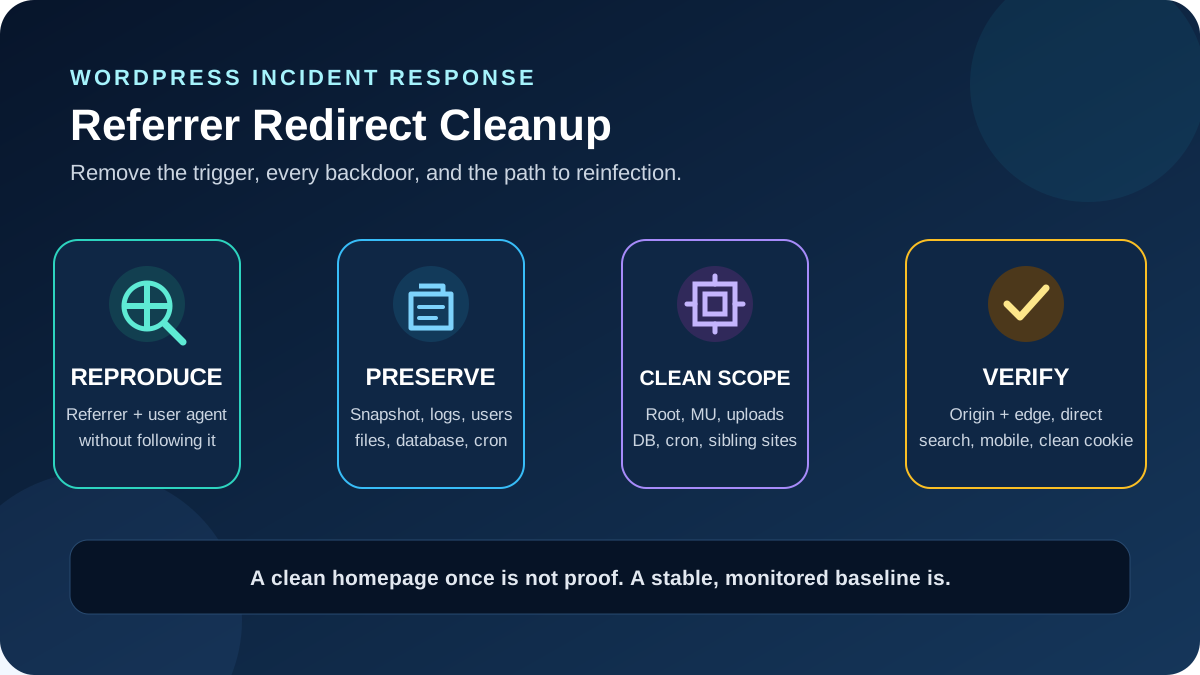
A WordPress white screen with no wp-admin access gives you almost no visible evidence. The browser may receive an empty 200 OK, a small error response, a gateway status, or HTML that CSS has made invisible. Those cases look similar but need different repairs. The safest recovery starts by recording what the request actually returned, then using the least invasive access route still available.
This guide shows how to recover a WordPress white screen when you cannot access wp-admin. It covers the true blank-output incident: no useful WordPress message on the public page and no working dashboard. If WordPress displays “There has been a critical error on this website” or sends a Recovery Mode email that names a failed component, follow the narrower WordPress critical-error recovery guide. Do not run both playbooks as separate experiments.
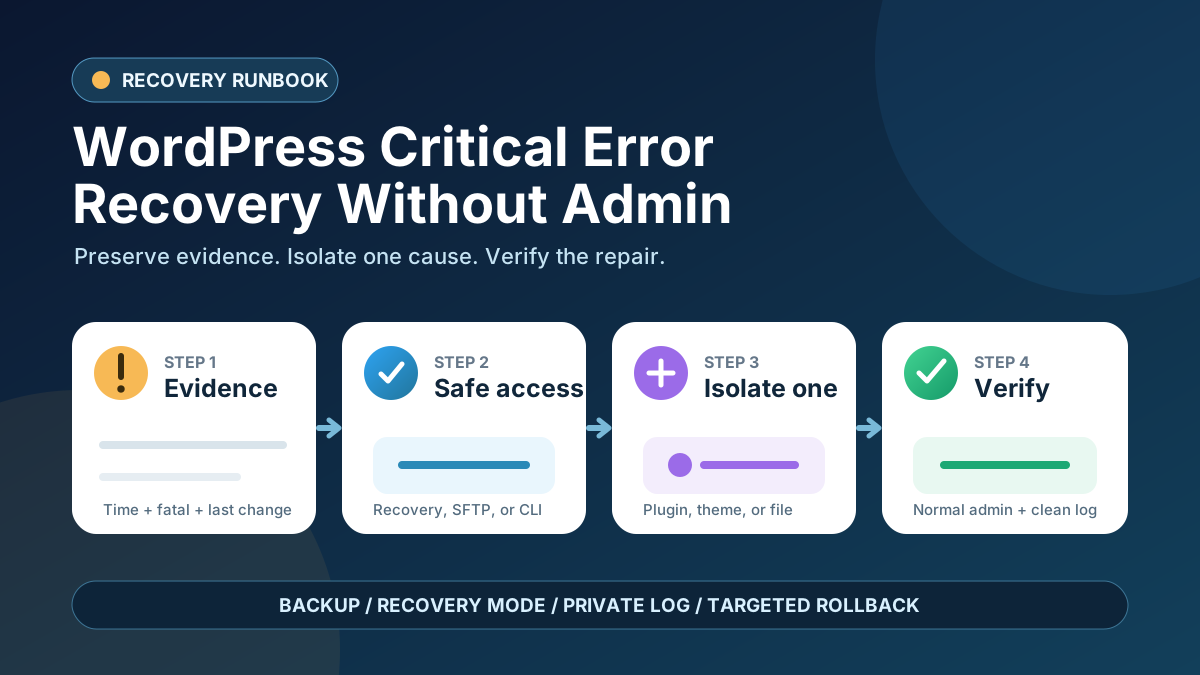
Quick answer: Record the failing URL, time, final HTTP status, transferred bytes, and whether the response is cached. Check the host’s PHP/server log at that timestamp. Back up the current database and files, then pause only the plugin, theme, custom code, drop-in, or damaged file supported by the evidence. Use a bulk plugin or database fallback only when targeted access is impossible. Verify the repair logged out, in normal wp-admin, on mobile, and through the site’s real business workflow.
| What you observe | Likely layer | First check |
|---|---|---|
Document is 200 with zero or very few bytes | Suppressed PHP failure, early exit, or cached blank response | Response body, cache headers, and PHP log |
Document is 500 | PHP/application or server configuration | Matching PHP/server error entry |
502, 503, or 504 | PHP worker, upstream, resource, or maintenance issue | Host status and resource/error logs |
| Only logged-out visitors see white | Page cache, CDN, or visitor-only code path | Cache status and uncached origin test |
| Only one URL or template is white | Template, shortcode, query, or route-specific plugin code | That request’s trace and recent edit |
| HTML exists but the viewport is blank | CSS, overlay, opacity, or front-end script | View source and disable styles locally in DevTools |
| Static image works, but site and wp-admin are white | WordPress/PHP path rather than total hosting outage | PHP log and access ladder below |

Protect current data before recovery. Take a database export and a copy or snapshot of the site files before replacing files, editing options, or changing PHP. Also preserve the post-failure state and logs; an older restore point does not contain the failure evidence. On a store, membership, booking, or lead site, restoring an older database can erase new orders, users, subscriptions, and submissions. Reproduce invasive steps on staging whenever the production symptom can be copied safely.
1. Capture the blank response before changing WordPress
Open a private browser window so administrator cookies do not alter the request. In Chrome, open DevTools, select Network, enable Preserve log, reload once, and select the main document request. Record the requested URL, final URL after redirects, status, transferred size, content type, response headers, and the Response tab. Chrome documents that the Network panel records requests while it is open and can preserve them across reloads.
- Test the homepage, one known page,
/wp-login.php,/wp-admin/, a static image, and/wp-json/. - Repeat from a normal logged-in browser only if you already have a live session; do not log out of your last working session.
- Record the exact test time and timezone so the host can correlate PHP, web-server, proxy, and firewall logs.
- Save a screenshot and the relevant response headers. Do not publish cookies, authorization headers, server paths, or personal data.
If View Source contains normal headings and links while the viewport is empty, this is not a true server-side white screen. Inspect computed styles for display:none, zero opacity, white-on-white text, or a full-screen overlay, and trace the responsible stylesheet or script. If the document body itself is empty or truncated, continue with server-side recovery.
2. Separate a cached blank page from a broken origin
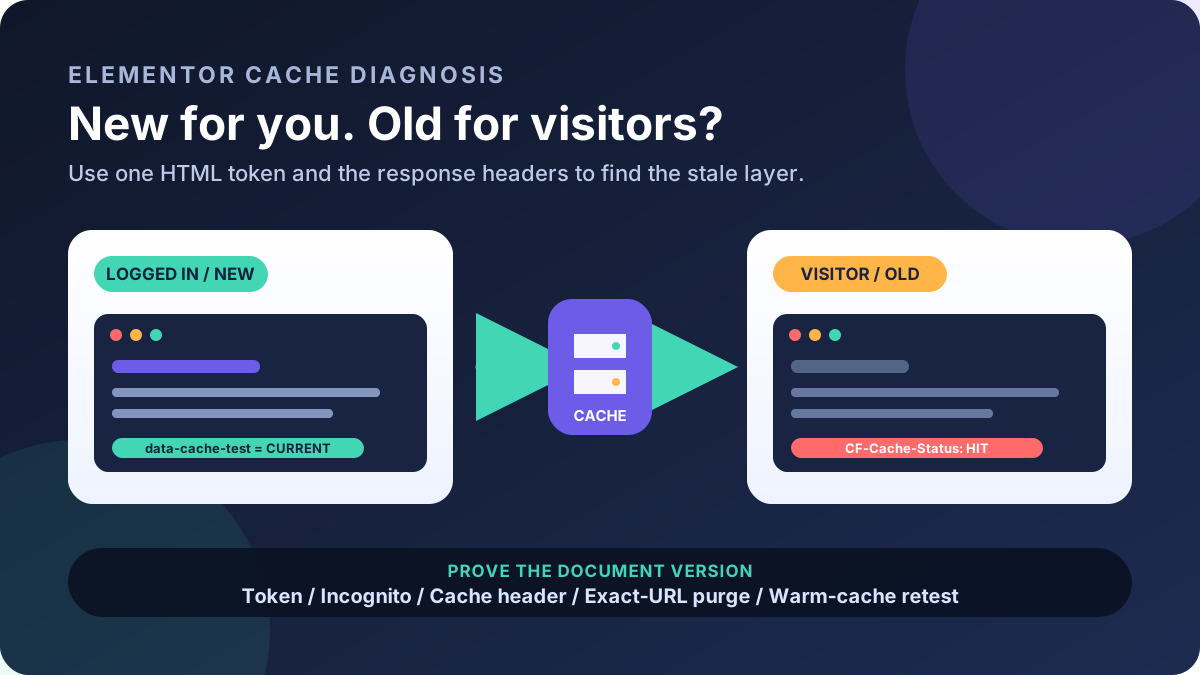
Compare a private logged-out request with a logged-in request and a host-provided cache bypass, if one exists. Look for vendor cache headers, an Age value, or a documented HIT, MISS, BYPASS, or STALE result. For example, Cloudflare documents that HIT came from cache, MISS came from the origin, and STALE can be served when the origin cannot be reached.
Preserve the headers first, then purge only the affected URL from the page cache, host cache, and CDN. A purge is a diagnostic step, not the repair. If an uncached origin request works but the public HIT is blank, remove the bad cached object and identify why a blank or error response was cacheable. If both origin and cache are blank, continue to the PHP/server log.
Use a two-request proof: capture the public cached response and a documented origin or cache-bypass response within the same minute. Different bodies identify the cache boundary; identical blank bodies prevent a needless purge-and-retry loop.
3. Choose the safest access route still available
| Access available | Best use | Important limit |
|---|---|---|
| Recovery Mode email | Open the special session and inspect the paused component | Use the critical-error guide for the full workflow |
| Hosting control panel | Read PHP/server logs, copy files, inspect resources, and take a backup | Do not apply every suggested “fix” at once |
| SFTP/FTP or file manager | Copy and rename one evidenced plugin or theme folder | Folder access does not safely edit serialized database values |
| SSH and WP-CLI | List, deactivate, switch, and verify with explicit targets | Must-use plugins still load with --skip-plugins |
| Database only | Emergency normal-plugin deactivation after an export | Last resort; multisite scope and prefixes matter |
| No technical access | Give the host the URL, timestamp, status, and last change | Do not upload a new WordPress install blindly |
WordPress Recovery Mode has existed since WordPress 5.2 and may detect a fatal PHP error during a normal page load. If the email is present, it can provide a safe administrator session while the detected plugin or theme is paused for that session. A white screen does not guarantee that Recovery Mode detected the failure or that email delivery worked, so file and host access remain valid recovery routes.
4. Read the server evidence before isolating components
Open the host’s PHP, application, and web-server error logs. Load the broken URL once at a recorded time, then refresh the log. Start with the new fatal, timeout, worker, permission, or out-of-memory entry that matches that request. The oldest dramatic line may belong to a different cron job or site.
If the host log is unavailable or does not capture the request, WordPress documents a private debug-log configuration. Edit existing definitions in wp-config.php, or add these lines before the stop-editing comment. Do not create duplicate constants.
define( 'WP_DEBUG', true );
define( 'WP_DEBUG_LOG', true );
define( 'WP_DEBUG_DISPLAY', false );
@ini_set( 'display_errors', 0 );- Load the broken URL once and note the time.
- Download
wp-content/debug.logand match only the new entry. - Keep the fatal header and a short redacted trace; the separate debug-log guide should own deep stack interpretation.
- Restore the original configuration and remove the exposed log after preserving the evidence.
An empty WordPress log can mean execution failed before WordPress configured logging, the content directory is not writable, or the web server/PHP worker failed outside WordPress. Return to the host log. Never turn on public error display on a production site: messages can reveal paths and configuration details.
5. Isolate the one component named by evidence
Match the first relevant path in the error to its owner. A path under wp-content/plugins/example-plugin/ supports testing that plugin; a child-theme path supports restoring that edit or switching the theme; wp-content/mu-plugins/ names a must-use plugin; and root drop-ins such as object-cache.php, advanced-cache.php, or db.php require their own rollback plan. A fatal that surfaces in wp-includes can still have been triggered by third-party input, so the complete call path and last change matter.
- Download or archive the exact target folder or file.
- Rename one normal plugin folder to a clear temporary name such as
example-plugin.disabled, or use WP-CLI to deactivate its slug. - Test the original URL logged out and normal
/wp-admin/. - If nothing changes, restore the exact name immediately; that isolation test did not support the hypothesis.
- If access returns, keep the component inactive while you compare requirements, recent releases, and the last known-good package on staging.
wp plugin status --skip-plugins --skip-themes
wp plugin deactivate example-plugin --skip-plugins --skip-themes
wp theme list --skip-plugins --skip-themes
WP-CLI documents that --skip-plugins does not skip must-use plugins. Do not rename mu-plugins or a cache/database drop-in without identifying its loader, host dependency, and restoration order. Use the WordPress plugin audit to map ownership and business dependencies before replacing or removing a component.
6. Use bulk plugin deactivation only as a fallback
If logs provide no target and no narrower access path works, WordPress’s troubleshooting documentation permits renaming wp-content/plugins to a temporary name such as plugins.hold. Loading the plugins screen after access returns marks the missing normal plugins inactive; renaming the directory back restores the files but does not reactivate them.
Record the active plugin list first if possible. Bulk deactivation can stop checkout, payments, security, caching, redirects, forms, SMTP, memberships, multilingual routing, and scheduled integrations. Restore the directory name, then reactivate deliberately in tested groups. If the white screen remains, restore the original state and investigate the theme, must-use plugins, drop-ins, custom code, PHP, or core rather than treating every inactive plugin as disposable.
7. Switch the theme only when the theme path is implicated
First confirm an installed default WordPress theme is compatible with the site’s WordPress version. With WP-CLI, list themes while skipping normal plugins and themes, then activate the verified slug. If only file access exists, renaming the active theme folder relies on a valid fallback theme being installed; without one, it can replace the white screen with a different failure.
wp theme list --skip-plugins --skip-themes
wp theme activate twentytwentyfive --skip-plugins --skip-themes
If a recent child-theme edit caused the failure, restoring that exact file is smaller than changing the whole design. Test headers, templates, menus, widgets, custom post types, WooCommerce layouts, and mobile output before keeping a fallback theme live.
8. Change PHP or resources only when the log proves it
An Allowed memory size exhausted line proves the request hit its effective limit, but the final allocation is not always the root cause. A loop, huge query, import, image task, or incompatible plugin can consume any higher allowance. Confirm the web request’s actual PHP version and limits in the hosting panel, plus disk space, inode usage, PHP worker availability, database health, and upstream timeouts.
Apply a modest, host-supported limit change only when monitoring shows capacity is appropriate, then repeat the exact request and check the log. Do not set unlimited memory or execution time. If the white screen began immediately after a PHP-version switch, a short rollback can restore access, but the durable fix is a supported PHP version plus compatible theme, plugins, and custom code. If the whole site is also slow or returning gateway errors under load, the WordPress bottleneck guide covers capacity and queueing in depth.
9. Verify core before replacing WordPress files
Use wp core verify-checksums when SSH is available. WP-CLI documents that this command compares the installed core files with WordPress.org checksums before WordPress loads. Pass the correct version and locale if needed. A checksum mismatch, missing core file, or interrupted update is evidence; a stack trace mentioning core is not.
If evidence confirms incomplete or damaged core, follow the official manual-update procedure with a verified backup and an official package. Preserve wp-config.php and the existing wp-content; replace core within the documented boundaries. Do not copy a blank database or a fresh site’s wp-content over production. A visible maintenance message belongs to the maintenance-mode incident, not this white-screen workflow.
10. Use the database only as the last plugin-access route
If database access is the only route left, export the database before editing. WordPress documents setting the correct site’s active_plugins option to the empty serialized array a:0:{} to deactivate all normal plugins. Confirm the real table prefix, database, and site scope; multisite and network-active plugins require different handling. Save the original value separately.
This is an emergency access technique, not a culprit test. Do not hand-edit unfamiliar serialized arrays, search-and-replace the database, or clear options tables. After access returns, reactivate plugins deliberately and verify their data. Ask the host or a WordPress developer to perform the change if the database layout is unfamiliar.
11. Verify recovery, then close every temporary change
- Open the original failing URL in a fresh logged-out window and confirm expected content, status, and non-empty response.
- Open normal
/wp-admin/outside Recovery Mode; edit and safely save a representative item. - Test desktop and a real mobile device or mobile connection. Check menus, overlays, responsive templates, images, and interactive controls.
- Complete the site’s business path: contact form and delivery, search, login, registration, booking, membership access, add-to-cart, checkout, payment sandbox, order email, or the workflow the disabled component owns.
- Check PHP/server logs at the new timestamps and confirm the fatal or resource failure did not recur.
- Purge only the cache layers affected by the final change, then repeat the logged-out test.
- Restore temporary folder names, turn off debug logging, remove exposed logs, and document the final component version and rollback point.
If the verification fails, undo the smallest change first: restore the exact folder name, configuration copy, theme, plugin package, PHP setting, or saved database option. Use a full restore only when targeted rollback cannot recover the site, and protect newer transactional data. Confirm what your backup includes with the guide to WordPress and Elementor backup scope.
Recovery is complete when: the original page returns the expected non-empty response logged out; normal wp-admin works without a special session; mobile and business-critical actions succeed; the new log contains no repeat failure; caches no longer serve a blank object; and all temporary debugging, folder names, and emergency settings have been closed.
Prevent the next white-screen outage
- Maintain tested file-and-database backups with documented retention and restore ownership.
- Stage plugin, theme, PHP, and core changes against representative pages and real workflows.
- Keep a version inventory, recent-change log, and emergency access details for the host, SFTP, database, and SSH.
- Monitor public HTML status and response size, not only uptime or a cached screenshot.
- Keep PHP/server logs available for an appropriate retention period and restrict access to them.
- Update custom code and dependencies together; never merge incomplete plugin or core packages.
- Document the owner and bypass method for every page cache, host cache, CDN, must-use plugin, and drop-in.
Official and primary sources
- WordPress common errors and White Screen of Death
- WordPress Recovery Mode
- WordPress troubleshooting FAQ
- Debugging in WordPress
- WordPress backup guidance
- WordPress wp-config.php reference
- WP-CLI plugin deactivate command
- WP-CLI theme activate command
- WP-CLI core checksum verification
- Official WordPress update procedure
- Chrome DevTools Network reference
- Cloudflare cache response statuses
Frequently asked questions
Why does a WordPress white screen return 200 OK?
The request can stop after headers are sent while error display is disabled, or a cache can store an empty response as successful. Status alone does not prove the page is healthy. Check transferred bytes, response body, cache headers, and the PHP/server log at the same timestamp.
Should I clear every cache first?
No. Preserve the cache headers and compare a documented bypass or origin request first. Purge the affected URL after you know whether the blank response is a cache hit. Clearing all layers too early removes evidence and does not repair a broken PHP origin.
Will renaming the plugins folder delete plugin settings?
Renaming the folder does not normally delete plugin database settings, but it disables normal plugins after WordPress sees them missing. Their dependent workflows can stop, and reactivation may run migrations or scheduled work. Record the original state, restore the folder name, and reactivate deliberately.
What if only wp-admin is white but the public site works?
Capture the admin document request and timestamp. The cause is more likely an administrator-only plugin hook, dashboard widget, update screen, user-specific code path, or resource-heavy admin request than the public theme. Do not switch the theme unless the trace implicates it.
When should I restore a backup?
Restore when the site cannot be recovered with a smaller reversible change, or when a tested restore is the approved incident plan. Preserve current files, logs, and transactional data first. A restore can recover availability while erasing the evidence and any data created after the restore point.
Need evidence-first WordPress recovery?
AbdullahWP can trace the blank response across cache, PHP, plugins, themes, custom code, hosting, and WordPress core; apply the smallest supported repair; and verify the workflows that protect your leads or revenue. Review the WordPress troubleshooting and recovery services.